The Terrain Project
The Terrain Project
The ways in which gendered narratives are enacted in the spaces between the domestic interior and the landscape, the deep of the ocean and the depths of the unconscious are the terrain that these bodies of work move across. From intimate etchings to installations, the borderline between body and place is investigated as a site which is intricately fused.
Works from this project are included in the Smithsonian Museum of African Art, The New York Public Library, The Johannesburg Art Gallery, MTN Collection the SABC Collection and the Wits Art Museum.
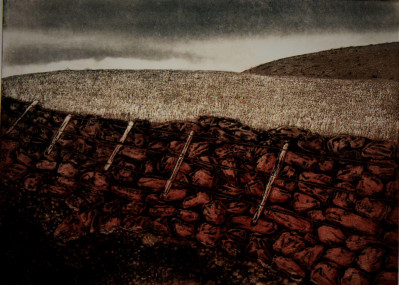
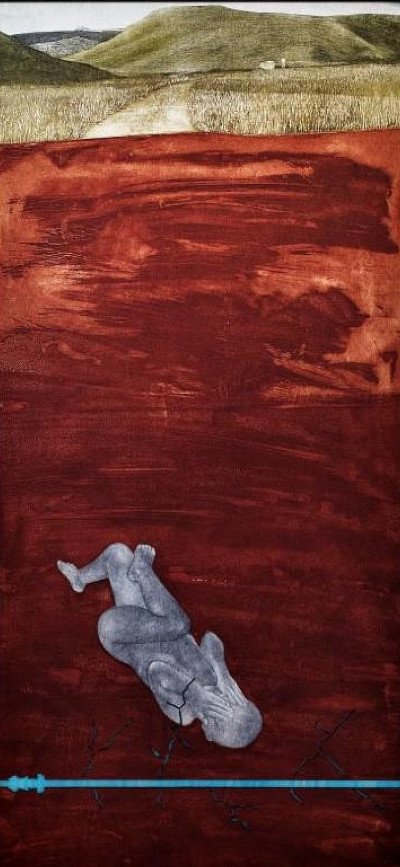
Bloodspoor/ Thresholds (1997)
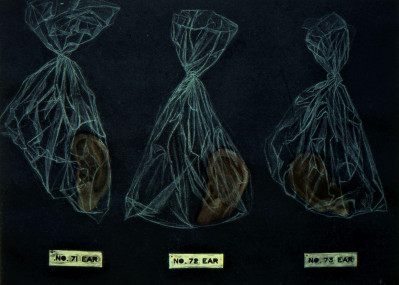
Christine Dixie's work is concerned with landscape. However, it is also interested in the relationship between vision, surveillance, and trauma. Instead of the azure distances and aerial perspective we find in topographical illustration, her printmaking offers a different view of gendered, threshold spaces. (David Bunn, 1998)
https://issuu.com/christinedixie/docs/2008_-_against_the_picturesque_christine_dixie_s_b
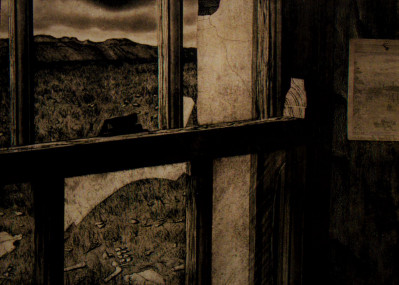
No Angels (1998)
No Angels is an installation piece that fills two rooms of a deserted Karoo village house. It is a violently unsettling work that compresses two elements of the narrative into a single time-space event: the claustrophobic interior space of the remote farm, and the pathetic remnants of the roadside picnic. ( David Bunn, 2007)
https://christinedixie.com/exhibitions/xoe
Track (2000)
‘For these prints and installations, she sought out an abandoned siding on a disused section of Railway track over the Sneeuberg mountains. Like the toppled and stranded monuments of the USSR, the derailed locomotives she found spoke of the past state, and the role of the SAR&H in fostering white working-class job protection and an iconic sense of white nationhood.’ (David Bunn, 2007)
https://christinedixie.com/exhibitions/track
Below the Sediments (2002 -2018)
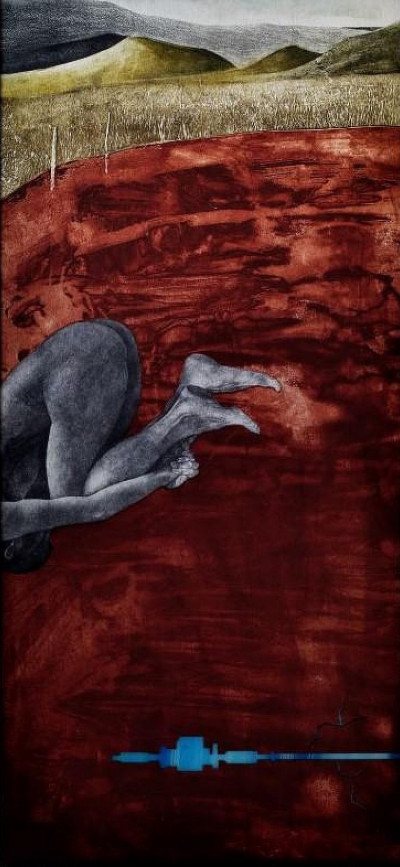
Diagrammatic images of hard edge pipes depicting the damage of horizontal drilling and hydraulic fracturing, (commonly known as fracking) are superimposed on a depiction of a karoo landscape in which over two thirds of the image depicts the earth below.
https://christinedixie.com/exhibitions/below-the-sediments
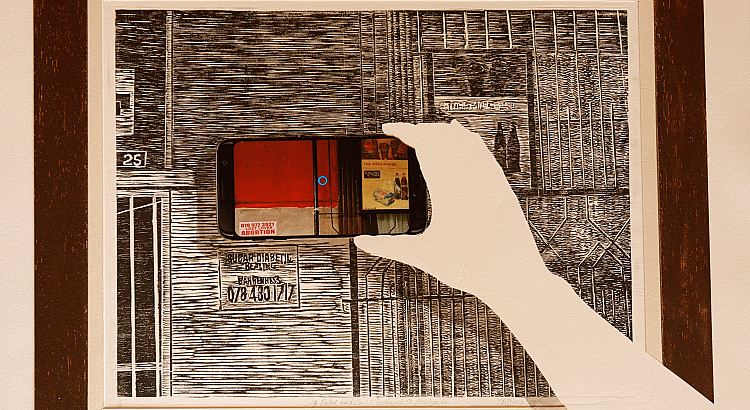
@Bathurst St., Makhanda (2022)
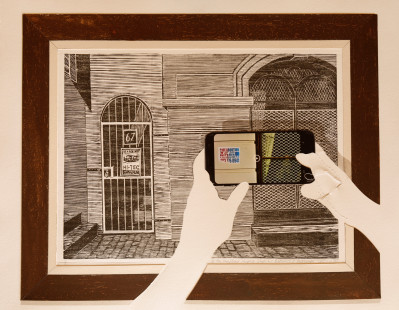
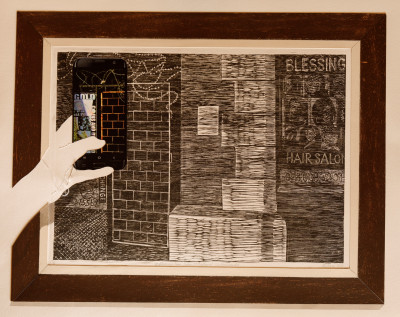
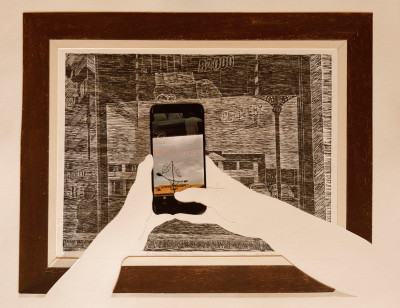
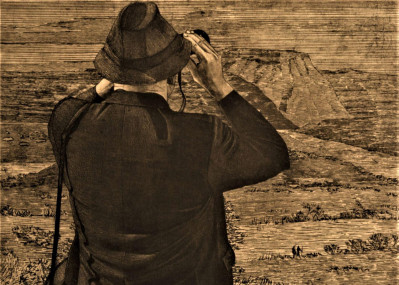
In the prints, the woodcut imitates an ‘engraving’, the style in which images of the frontier were transmitted to the European ‘centre’ in newspapers such as The Illustrated London News. It is through the frames of the cellphone, devices from the present, that a new narrative is taking place.
https://christinedixie.com/exhibitions/atbathurst-st-makhanda
The Abyssal Zone (2024)
The shadowy place of the Abyssal Zone on the ocean floor is now threatened with the judder of collectors, the throbbing of tracked mining vehicles and pulsing bottom crawlers that spew toxic sediment plumes. With deep-sea mining the silence will become loud with reverberations and the phantastic blind creatures who live there will become visible. In this disrupted order in which place and space have been inverted, fish, now inedible swim alongside spacecraft and our dreams are haunted by the sounds emanating from the abyss.
https://christinedixie.com/exhibitions/the-abyssal-zone
Harbouring Fanon (2025)
In Harbouring Fanon a non-mimetic portrait of Franz Fanon is evoked through a depiction of some of the literal harbours he travelled to in his lifetime. The images track his life from his birth-place on the island of Martinique tp the place where he died, Bethesda, maryland, USA. The prints merge the concept of harbours as both a literal place, in which ships are anchoredwith he concept of giving harbour or shelter to a particular vision of the world.
https://christinedixie.com/exhibitions/harbouring-fanon-2025
Under Pressure: Botanical Hauntings (2025)
The world over, plant specimens gathered for Linnean-inspired herbariums are ‘pressed’, that is, ‘put under pressure’ so that they lie flat in order to comply with standard herbarium sheet requirements. It could be said that they are ‘pressed’ into the service of a scientific, colonial, classifying system. Using print (the transfer of one surface onto another) as a starting point, the six artists on this exhibition, respond to the ways that plant life, its presence and absence has haunted their practice and their lives.
https://christinedixie.com/exhibitions/under-pressure-botanical-hauntings